Vending machine finance & loans — Australia wide

Maximum flexibility, no obligation to buy

Equipment Rental Agreement Australia: Flexible Asset Financing Guide

Discover flexible equipment rental agreements in Australia. Preserve capital, enjoy tax-deductible payments, and upgrade hardware easily.

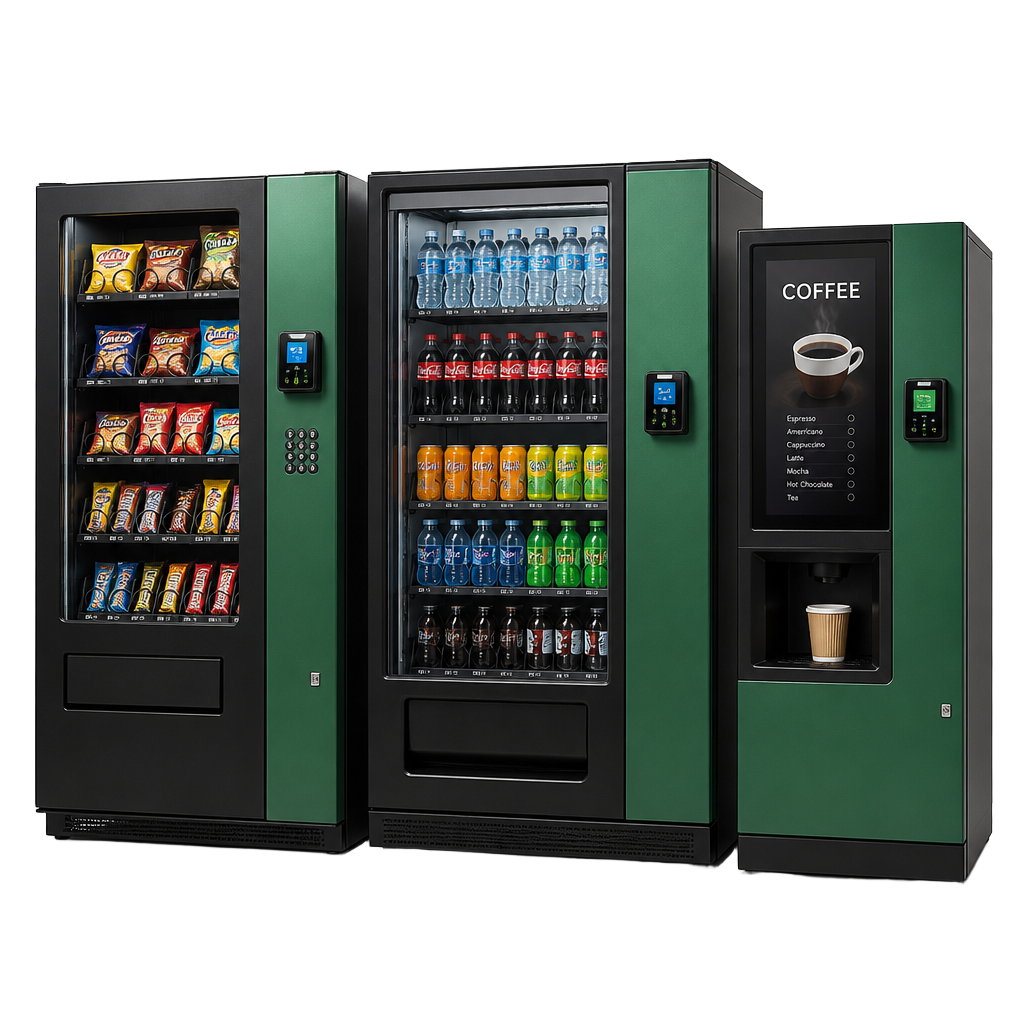
Vending machines installed in a shopping centre under a short-term rental agreement

Quick answer

An equipment rental agreement lets Australian businesses use commercial equipment for a set term without purchasing it upfront. The financier owns the asset while you pay tax-deductible rental installments. At term end, you can upgrade, return, or extend the agreement, providing maximum cash flow flexibility.

An equipment rental agreement in Australia is a flexible commercial finance structure where a business rents operational assets from a financier for a fixed or month-to-month period. Unlike traditional ownership loans, the lender retains legal title while your business gains immediate use of revenue-generating equipment. This model preserves working capital, provides tax-deductible rental payments, and simplifies upgrades when technology advances. Whether funding smart vending machines, commercial technology, or industrial machinery, equipment rental agreements allow Australian businesses to access modern tools without tying up capital in permanent asset ownership or debt.

Why Equipment Is a Revenue-Producing Asset Rather Than a Cost

Commercial equipment should never be viewed as a passive cost center; rather, equipment is a vital, revenue-producing asset that drives cash flow and operational scale. In sectors like automated retail, food service, health, and logistics, modern machinery directly produces daily sales income. By deploying an equipment rental agreement, businesses acquire income-generating hardware immediately without sacrificing cash reserves. The income generated by the equipment often vastly exceeds the monthly rental obligation, turning equipment finance into a self-funding growth strategy. Treating equipment as a dynamic profit enabler rather than tied-up capital allows Australian companies to expand their footprint, serve more customers, and reinvest working capital into inventory, marketing, and staff.

How an Equipment Rental Agreement Works Step-by-Step

An equipment rental agreement operates through a streamlined four-step workflow: 1. Asset Selection & Invoice Approval: Your business selects the required hardware from an Australian supplier and receives an itemised commercial invoice. 2. Finance Application & Approval: Vending Finance connects you with tailored lenders from our referral marketplace who evaluate your ABN, trading history, and cash flow. 3. Lessor Purchase & Agreement Signing: Upon approval, the lessor buys the equipment directly from the supplier and executes a rental agreement establishing payment schedules, term length, and usage conditions. 4. Deployment & Maintenance: The equipment is installed at your premises or commercial location, generating income while you make regular, predictable rental payments. Throughout the term, legal title remains with the lessor, while your business retains possessory rights to use the equipment exclusively.

Legal Ownership, PPSR Registration, and Tax Treatment

Under an Australian equipment rental agreement, legal title remains strictly with the financier (the lessor). The equipment is registered on the Personal Property Securities Register (PPSR) by the lender to protect their security interest against third-party claims. Because the hardware is owned by the lessor, it is generally treated as an off-balance-sheet operating item under traditional accounting standards, though AASB 16 rules may apply depending on your corporate structure. From a tax perspective, rental installments are typically fully tax-deductible as an operating expense when the asset is directly used for business purposes. GST is applied to each monthly rental payment rather than financed upfront, assisting cash flow management. Always consult a qualified CPA or registered tax agent to confirm how rental accounting and GST deductions apply to your specific ABN structure.

Typical Rental Terms and End-of-Term Outcomes in Australia

Australian equipment rental agreements offer tailored terms ranging from flexible 12-month arrangements to standard 36, 48, or 60-month schedules, as well as short-term month-to-month contracts for specific projects. At the conclusion of the rental term, businesses benefit from clear, adaptable options: • Equipment Upgrade: Return the old equipment and roll into a new rental agreement for modern, energy-efficient models. • Rental Extension: Continue renting the asset on a reduced monthly rate or standard month-to-month terms. • Asset Return: Hand back the equipment to the lessor with no further financial obligations, subject to standard wear-and-tear conditions. • Negotiated Purchase: Depending on contract terms and lender agreement, request to buy the equipment at fair market value. This flexibility prevents technology obsolescence and avoids residual balloon payment debt common in capital finance structures.

Documentation Lenders Require for Approval

To secure an equipment rental agreement through our lender panel, Australian business owners typically need to provide standard commercial documentation. Approval requirements depend on whether the application is processed under streamlined micro-ticket fast-track rules or full-doc underwriting: • Valid Australian Business Number (ABN) or ACN (minimum 6–12 months trading preferred) • Proof of Identification (Driver's Licence or Passport for business directors) • 3 to 6 months of recent business bank statements demonstrating healthy cash flow • Supplier quote or tax invoice for the business equipment being rented • For larger exposures, interim financial statements (Profit & Loss and Balance Sheet) Lenders we refer you to use these documents to verify trading stability and serviceability without demanding extensive asset collateral.

Illustrative Worked Example: Smart Vending Machine Route

To illustrate how an equipment rental agreement operates in practice, consider this clear, round-number scenario: An established operator acquires two commercial combination vending machines valued at $12,000 total (inc. GST). • Asset Cost: $12,000 • Rental Term: 36 Months • Monthly Rental Payment: $420 + GST ($462 total) • Total Outlay over 36 Months: $16,632 (inc. GST) • Monthly Vending Revenue Generated: $1,800 • Net Monthly Cash Flow Contribution: $1,338 ($1,800 revenue minus $462 rental cost) In this illustrative scenario, the equipment pays for itself immediately out of daily customer receipts while preserving $12,000 in cash reserves. At month 36, the operator chooses to upgrade to touchscreen telemetry models, maintaining high sales velocity without balance sheet debt.

Advantages and trade-offs at a glance

Advantages

  • Maximum operational flexibility with short or medium-term commitments, enabling easy upgrades as hardware technology evolves.
  • Off-balance-sheet operating flexibility that helps preserve capital and existing bank credit lines for core growth.
  • Rental payments are generally fully tax-deductible as an operating expense when equipment is used for business purposes.
  • No upfront capital layout required, preserving working capital and cash flow for day-to-day operations and inventory.
  • Simple end-of-term options allowing businesses to return obsolete equipment, extend rentals, or negotiate upgrades effortlessly.

Things to weigh up

  • Total long-term rental outlay may exceed the initial cash purchase price over an extended period.
  • Your business does not build balance sheet equity in the underlying hardware during the rental term.
  • Early termination of fixed-term rental contracts usually incurs early exit fees or payout obligations.

Who this structure suits

  • Businesses requiring equipment with rapid technological obsolescence or high upgrade frequency
  • Operators scaling vending routes or retail footprints without locking into long-term balance sheet debt
  • Enterprises looking to keep equipment off the balance sheet while managing short-to-medium project terms
  • Startups and growing SMEs wishing to preserve working capital and existing bank overdraft facilities

How it compares with the other structures

An equipment rental agreement provides maximum operational flexibility compared to equity-building ownership structures like a chattel mortgage or commercial hire purchase. Under a chattel mortgage or hire purchase, your business takes immediate ownership or builds equity on the balance sheet, incurring capital depreciation and long-term debt liabilities. Conversely, a rental agreement acts as an operational expense where the financier retains ownership, allowing you to easily return or upgrade equipment at term end. Compared to a traditional finance lease or capital lease, rental agreements offer shorter, more adaptable terms (often starting from month-to-month or 12 months) and simpler return conditions without compulsory balloon commitments. Pick an equipment rental agreement when staying technologically current and maintaining cash liquidity outweigh long-term asset ownership; choose a chattel mortgage or hire purchase when high residual equity and permanent equipment ownership are your primary commercial objectives.

Work out your repayments

Use our calculators to sanity-check the numbers before you apply. Repayment guidance is indicative only — the lender you are matched with sets the final rate, term and fees.

Frequently asked questions

Who owns the equipment under an equipment rental agreement?

Under a standard equipment rental agreement in Australia, the financier retains legal ownership and title. Your business obtains full possessory rights to use the equipment to generate revenue. At the end of the agreement, you may return the equipment, extend the term, or negotiate an upgrade or purchase, depending on contract terms and lender policies.

How are rental agreement payments treated for tax and GST?

Generally, rental payments made under an equipment rental agreement are deductible as an operating expense for tax purposes, provided the asset is used to generate assessable income. Additionally, GST is typically payable on each monthly installment rather than upfront. Tax treatments vary based on business structure, so always consult a registered tax agent or accountant.

Can I upgrade my equipment during or at the end of the rental term?

Yes, a primary advantage of equipment rental agreements is the option to upgrade hardware before or at the end of the term. This allows operators to replace outdated equipment with modern, higher-yielding models without refinancing or taking on new capital debt liabilities.

What happens when the rental agreement term ends?

When a rental term finishes, you typically have several choices: return the equipment to the lessor with no further obligations, extend the rental agreement on a month-to-month or fixed basis, or discuss purchasing the asset at fair market value, subject to lender approval.

What documentation is needed to apply for rental equipment finance?

Lenders we refer you to generally require an active ABN/ACN, 3 to 6 months of business bank statements, identification (Driver Licence or Passport), and equipment supplier tax invoices. For larger funding requests, financial statements such as Profit & Loss and Balance Sheets may be requested.

Can a start-up or new ABN holder get an equipment rental agreement?

Yes, start-up businesses can qualify for rental agreements. Lessors evaluated via our referral marketplace often look at total credit history, business plans, director assets, or cash reserves. Some lenders offer micro-ticket rental approvals designed specifically for new commercial ventures.

Not sure which structure fits your vending route?

Tell us what you are buying and how you trade. We are a referral marketplace — we match your enquiry to lenders who fund this kind of equipment. Approval, criteria and pricing always sit with the lender.