Finance guide
Financing used vending machines in Australia
Second-hand machines are the cheapest way to grow a route — but they are assessed differently. Here is what affects fundability, and how to keep an application clean.
The short answer
Lenders will fund used vending machines, but most apply an age limit, a minimum facility size and a valuation check. Newer, mainstream, cashless-ready equipment is easiest to fund; very old or very cheap machines are often financed as part of a package instead.
Primary citations
Used vending machines are excellent value and a completely normal thing to finance. They are, however, assessed differently to new equipment, because a lender is funding an asset that already has years behind it. Understanding what shifts the outcome — age, seller type, invoice quality, identification — lets you buy second-hand without walking into an avoidable decline.

Why used equipment is assessed differently
Equipment finance is generally secured against the equipment. That means the lender cares about two things beyond your own profile: can the asset be identified, and what is it worth if it ever has to be recovered and sold?
A new machine answers both questions easily. A used machine introduces uncertainty — age, condition, remaining useful life, and whether there is a resale market for that model in Australia. Lenders manage that uncertainty with policy: age limits, deposit requirements, shorter terms, or a preference for dealer sales over private ones.
What tends to affect the outcome
These are the levers that come up repeatedly on second-hand equipment applications. Policies differ between lenders and we are not privy to their internal criteria, but the themes are consistent across the market.
- Age at settlement and age at the end of term. Many lenders think in terms of total age when the contract finishes, not just today's age — which is why an older machine may still be fundable over a shorter term.
- Seller type. A business seller with an ABN and a tax invoice is straightforward. Private sales are more restricted, and some lenders will not fund them at all.
- Identification. Make, model and serial number on the invoice. Unidentifiable equipment is very difficult to fund.
- Condition and inspection. Some lenders may want evidence of condition, particularly on higher amounts.
- Amount. Small amounts are sometimes handled under simpler low-doc style assessment; larger amounts attract more scrutiny.
- Your profile. ABN age, GST registration, credit history and whether you already have machines trading all feed into it.
Getting the paperwork right
More second-hand applications stall on paperwork than on the equipment. Fix this before you apply and you remove most of the friction.
- A proper tax invoice from the seller, showing their ABN, the buyer's details, and GST treatment.
- Make, model, serial number and year for every machine on the invoice.
- Soft costs — freight, install, cashless module — itemised as separate lines rather than bundled into a single number.
- No deposit already paid in cash, if you can avoid it. Let the funder settle with the supplier directly.
- Photographs of the machines, which some lenders will ask for on used equipment.
Structures that suit second-hand equipment
A chattel mortgage is the most common structure for buying used machines outright, because you own the asset from day one and the finance is secured against it.
A rental or operating-style agreement can suit older machines that are harder to fund on a purchase basis, because the arrangement is built around use of the equipment rather than a valuation-driven purchase.
Rent-to-own is the practical route when the machine is older or the operator is new, since it is assessed more on the arrangement and the equipment than on years of financial statements. The trade-off is a higher total cost across the term.
Our equipment finance types guide compares chattel mortgage, finance lease, commercial hire purchase, operating lease and rental agreements side by side, including the ownership and end-of-term differences.
When buying new is actually cheaper
It is worth running the comparison rather than assuming used always wins. A ten-year-old drinks machine with a tired compressor can draw significantly more power than a current model, and on a machine running continuously that difference is real money every year. Add a cashless retrofit, new seals and a coin mech update, and a $4,000 bargain becomes a $6,500 machine that still carries older technology.
Against that, a new machine at $9,000 financed over five years might cost around $190 a month. The right decision depends on the site and the numbers, not on ideology — do the arithmetic on the calculator both ways before you buy.
How we help
We are a referral marketplace for Australian vending operators. You give us the equipment details and your situation once; we match that to lenders whose criteria appear to suit second-hand equipment and your profile. The lender assesses and decides on its own criteria, which we are not privy to, and we may receive a commission when a deal settles. We cannot guarantee an approval, a rate, or a term — and anyone who tells you otherwise is selling something.
Frequently asked questions
Can you finance a used vending machine in Australia?
Yes. Second-hand vending equipment is commonly financed, though lenders apply age limits and often prefer a business seller with a proper tax invoice showing make, model and serial number.
How old is too old to finance a vending machine?
There is no single market-wide limit. Many lenders consider the machine's total age at the end of the term rather than today, so an older machine may still be fundable over a shorter term. Policy varies by lender.
Can I finance a machine bought from a private seller?
Sometimes, but it is more restricted than a dealer purchase. Lenders generally prefer a seller with an ABN and a compliant tax invoice; private sales are declined by some lenders as a matter of policy.
Do I need a deposit for used equipment finance?
Not always, but deposits are requested more often on older equipment or newer ABNs. The lender sets that requirement in its offer.
Is a chattel mortgage or a rental better for a used machine?
A chattel mortgage suits buying outright and owning the asset from day one. A rental or rent-to-own arrangement can suit older machines or operators without trading history. Speak to your accountant about which structure suits your circumstances.
Prefer to rent first?
If a traditional loan is not the right fit yet, rent to own keeps the machine working while you build a trading history:
Lender panel
Lenders across our referral network
Banks, non-banks and specialist equipment financiers active in Australian business lending. We match your application to lenders who may fit your situation.
Logos are the property of their respective owners and are shown for identification only. VendingFinance is a referral service, not a lender or broker. Inclusion here is not an endorsement, an offer of credit, or a guarantee of approval — each lender sets its own criteria.
Ready to price your machine?
Tell us the equipment and your situation once. We match you to lenders who may fit — it takes about five minutes and there's no obligation.
Keep reading
Who wrote and checked this page
David Barnes
Founder, Vending Finance
Has worked with Australian vending operators and equipment funders for years, matching operators to lenders who fit their situation. Writes and checks every guide on this site against the regulator, ATO and ABS pages cited below.
- Every figure is either an indicative market range we label as such, or traceable to a primary source listed below. We are a referral service, not a lender or broker, and we never give tax advice.
- Sources and figures on this page last checked August 2026. Spotted something out of date? Call 0412 025 552.
Sources & further reading
Every figure and rule on this page can be checked against a primary source. Links open the publisher's own page so you can verify it yourself.
- Australian Financial Security Authority — Personal Property Securities Register
Checking whether second-hand equipment or a vending route carries an existing security interest. Checked August 2026.
- Australian Taxation Office — Depreciation and capital expenses and allowances
How the cost of business equipment is claimed over its effective life. Checked August 2026.
- Reserve Bank of Australia — Interest rates statistics
The published lending rate environment our indicative ranges sit against. Checked August 2026.
- Vending Finance — Australian Vending Machine Cost & Return Index
Our own published price bands, indicative repayments and breakeven vends per day. Checked August 2026.
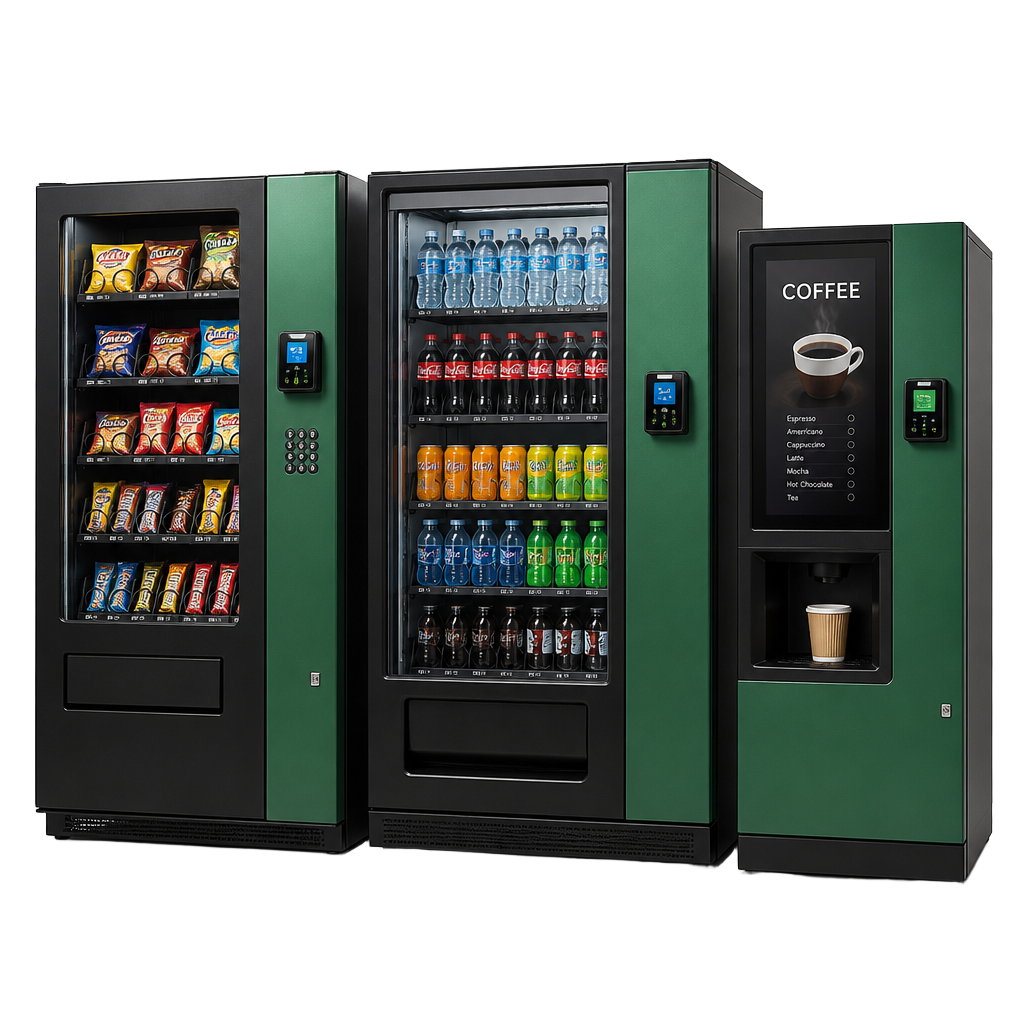
Secure yourRent to Own
Get vending machines on the road now and own them at the end of the term. New and established operators, Australia-wide — no financials required in many cases.
0% down options
Instant approval for qualified fleets