
Start-up guide
How to start a vending machine business in Australia
The order of operations that actually works — site first, machine second — plus the registrations, agreements, costs and funding paths for a 2026 start.
The short answer
To start a vending machine business in Australia you need an ABN, public liability insurance, a written site agreement, a wholesale stock supply, a servicing routine, and equipment. Most operators begin with one or two machines and fund the equipment rather than paying cash.
Primary citations
Vending is one of the few businesses you can start beside a full-time job and scale at your own pace. It is also one of the easiest to start badly. The single most common mistake is buying a machine first and then hunting for somewhere to put it. Sites are the scarce resource; machines are not. This guide runs through the steps in the order experienced operators actually do them.

Step 1 — Find the site before you buy the machine
A vending machine is only worth what the foot traffic in front of it will spend. Before you spend a dollar on equipment, get a verbal or written commitment from a site. Offices with 50 or more staff, factories and warehouses running shifts, gyms, car dealerships, wash bays, medical centres, apartment lobbies, sporting clubs and trade suppliers are all realistic first sites.
Approach the person who controls the space — the facilities manager, the practice manager, the workshop foreman — not reception. Bring one page: what machine you would install, what it stocks, that it costs the site nothing, that you service it, and that it is fully insured. Most first sites come from someone the operator already knows, so start with your own network before cold-calling.
- Count the people who pass the spot each day, not the people employed at the address.
- Check what is already there. A site with a tired old machine and an absent operator is an opportunity.
- Ask about power access, security after hours, and who signs off on the agreement.
- Confirm whether the site expects a commission on sales — many do, commonly a percentage of gross.
Step 2 — Set the business up properly
None of this is expensive, and lenders, suppliers and site owners will all ask for it. Getting it done before you need it removes a fortnight of delay later.
- Register an ABN. It is free through the Australian Business Register and usually issued immediately.
- Decide on a structure — sole trader, partnership, company or trust. Talk to an accountant; the right answer depends on your other income and your risk.
- Register for GST if you expect turnover of $75,000 or more, or if you want to claim GST credits on equipment purchases.
- Open a separate business bank account. Mixing personal and business transactions makes finance applications harder to assess.
- Take out public liability insurance, plus cover on the equipment itself. Site owners routinely ask for a certificate of currency.
- Check local council and food-handling requirements if you plan to vend fresh or chilled food.
Step 3 — Get the site agreement in writing
A handshake works right up until the building changes managers. A short written agreement protects the investment you are about to finance and is exactly what a lender wants to see if you are buying multiple machines.
- Term and renewal — a 12 to 36 month term with a rollover is common.
- Exclusivity — that no competing machine will be installed in the same area.
- Commission — the percentage, what it is calculated on, and when it is paid.
- Access — when you can service the machine and who lets you in.
- Power — who pays for electricity, which is usually the site.
- Removal — notice period, and your right to remove your own equipment.
- Transferability — whether the agreement survives a change of site ownership. This matters enormously if you ever sell the route.
Step 4 — Choose the right machine for that specific site
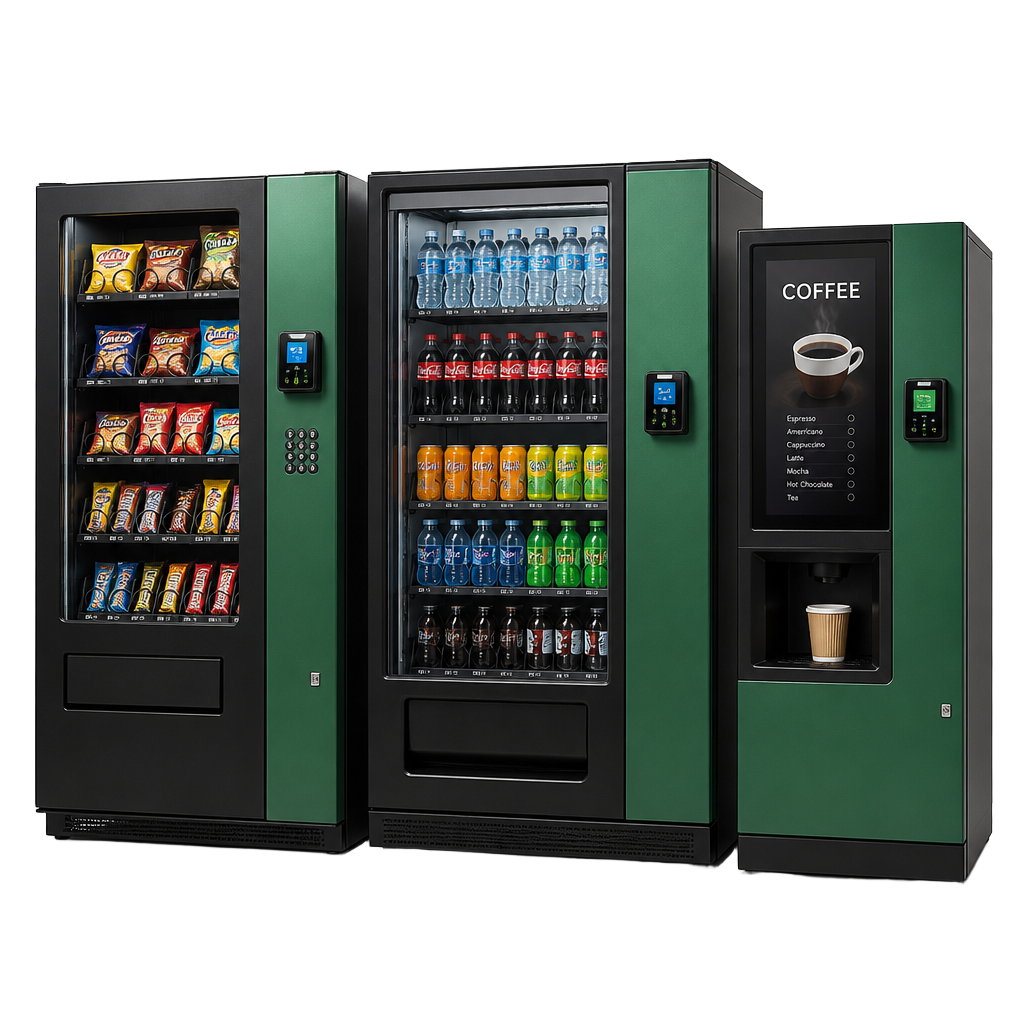
Match the machine to the audience, not to your preference. A factory floor with a hot shift wants cold drinks. A professional office wants coffee and better-quality snacks. A gym wants protein, water and electrolyte drinks and will barely touch chocolate. A medical centre needs machines that look clean and quiet.
Whatever the site, specify cashless payment. Card and phone taps now make up the majority of vending transactions in Australia, and machines that only take coins lose sales from people who simply do not carry them. Telemetry pays for itself the first time it stops you driving to a machine that did not need filling.
Step 5 — Sort out stock and servicing before day one
Buy stock from a wholesaler or cash-and-carry rather than a supermarket; the margin difference is the whole business. Track the expiry dates on everything, particularly chocolate in summer, and plan a rotation so nothing sits long enough to melt or go stale.
Set a service schedule and stick to it. A machine that is empty or out of order on a Monday morning does more damage to a site relationship than a machine that was never installed. Keep a small spares kit — a spare coin mech, a couple of belts, cleaning gear — and know who your technician is before you need one.
Step 6 — Fund the equipment without draining your cash
Your cash is needed for stock, fuel and the unexpected. Financing the equipment is the normal path in this industry, and equipment finance is generally assessed with the machine itself as the security, which is why operators with no property can still get funded.
If you are brand new — a fresh ABN, no trading history, no financials — you are not locked out, but your options narrow. Some lenders will look at a new ABN with a deposit or a guarantee. Rent-to-own is the other well-trodden route, because it is assessed more on the equipment and the arrangement than on years of accounts, and it gets a machine earning while you build a track record.
Whatever you choose, do the vends-per-day calculation before you sign. If the site cannot realistically clear the repayment plus a margin, the answer is a cheaper machine or a better site — not a longer term.
A realistic first-year picture
Nobody replaces a salary with one machine. A single well-placed machine typically behaves like a modest side income; the business becomes meaningful somewhere between five and fifteen machines, when the driving route starts to make sense and the fixed costs spread. Plan the first year as learning: prove one site, prove the product mix, then use that evidence when you ask a lender to fund the next three.
Frequently asked questions
How much money do I need to start a vending machine business in Australia?
Realistically $5,000 to $9,000 all-in for one refurbished machine including install, cashless and opening stock. Financing the equipment reduces the up-front cash needed to stock, insurance and set-up costs.
Do I need any licences to run vending machines?
You need an ABN and appropriate insurance. Additional food-safety or council requirements can apply if you vend fresh, chilled or prepared food, so check with your local council before you commit to a fresh food machine.
How do I find locations for vending machines?
Start with your own network, then approach facilities managers at sites with steady daily foot traffic — offices, factories, gyms, dealerships and medical centres. Sites with a neglected existing machine are the easiest to win.
Can I start a vending business with a brand new ABN?
Yes. Some lenders consider new ABNs, often with a deposit or a guarantee, and rent-to-own is designed for operators without trading history. Approval always sits with the lender and is never guaranteed.
How much commission do sites usually take?
It varies widely by site type and negotiation. Many arrangements involve a percentage of gross sales, and plenty of smaller sites take nothing because they value the amenity for staff. Always confirm it in the written agreement.
Prefer to rent first?
If a traditional loan is not the right fit yet, rent to own keeps the machine working while you build a trading history:
Lender panel
Lenders across our referral network
Banks, non-banks and specialist equipment financiers active in Australian business lending. We match your application to lenders who may fit your situation.
Logos are the property of their respective owners and are shown for identification only. VendingFinance is a referral service, not a lender or broker. Inclusion here is not an endorsement, an offer of credit, or a guarantee of approval — each lender sets its own criteria.
Ready to price your machine?
Tell us the equipment and your situation once. We match you to lenders who may fit — it takes about five minutes and there's no obligation.
Keep reading
Who wrote and checked this page
David Barnes
Founder, Vending Finance
Has worked with Australian vending operators and equipment funders for years, matching operators to lenders who fit their situation. Writes and checks every guide on this site against the regulator, ATO and ABS pages cited below.
- Every figure is either an indicative market range we label as such, or traceable to a primary source listed below. We are a referral service, not a lender or broker, and we never give tax advice.
- Sources and figures on this page last checked August 2026. Spotted something out of date? Call 0412 025 552.
Sources & further reading
Every figure and rule on this page can be checked against a primary source. Links open the publisher's own page so you can verify it yourself.
- Australian Business Register — Applying for an ABN
ABN entitlement and how long an ABN has been active. Checked August 2026.
- ASIC — Registering a business name
Business name registration requirements for new operators. Checked August 2026.
- business.gov.au — Funding your business
Government guidance on the main business funding options. Checked August 2026.
- Food Standards Australia New Zealand — Food Standards Code
Labelling and temperature requirements relevant to food and chilled vending. Checked August 2026.
- Australian Bureau of Statistics — Counts of Australian Businesses, including Entries and Exits
The size and survival profile of small businesses in Australia. Checked August 2026.
- ACCC — Unfair contract terms
Small business protections when reviewing a finance or site contract. Checked August 2026.
Secure yourRent to Own
Get vending machines on the road now and own them at the end of the term. New and established operators, Australia-wide — no financials required in many cases.
0% down options
Instant approval for qualified fleets