National guide
Vending machine finance Australia
Vending is one of the few small businesses where the asset you borrow against starts paying you back the week it lands. This guide covers how vending finance actually works in Australia — the structures, the numbers to sanity-check, what credit teams look at, and where the sites are, from capital-city towers to Riverina depots.
Australia has tens of thousands of unattended retail points — hospital corridors, factory crib rooms, gyms, car yards, mine camps, school canteens that shut at 2pm — and almost all of them are served by small independent operators rather than big companies. The barrier to entering that market has never really been the sites. It is capital. A good site offer has a short shelf life, and operators who can fund equipment quickly are the ones who take it.

What vending finance australia actually means in practice
Vending finance is a specific slice of equipment finance. The machine is a tangible, serialised, resaleable asset with a known secondary market, so financiers treat it far more comfortably than they treat an unsecured business loan for the same amount. That single fact shapes everything else: terms are usually two to five years, security is generally the equipment itself, and smaller facilities are often written on a low-doc basis without full financial statements.
The practical effect is that financing a vending machine changes the maths of starting up. Instead of putting $12,000 of savings into one combination machine and waiting a year to fund the next, the same $12,000 can become a deposit position across several machines while the takings service the repayments. That is leverage, and it cuts both ways — which is why the numbers section below matters more than any brochure.
The finance structures, and who each one suits
- Chattel mortgage — you own the machine from settlement and the financier takes security over it. Popular with GST-registered operators buying outright-owned assets they intend to keep well past the term.
- Finance lease — the financier owns the machine and you pay rentals over a fixed term, with end-of-term options set out in the agreement. Useful when you want a predictable fixed cost per machine.
- Rental or operating lease — shorter commitment, easier to refresh equipment. Suits operators trialling a site type or running technology that dates quickly, such as screen-based smart machines.
- Commercial hire purchase — you hire the machine and take title at the end of the term. Still used by operators who want ownership without an upfront outlay.
- Rent-to-own — the lowest-commitment entry point for a first machine, with a path to ownership. See the rent-to-own guide and the repayment calculator.
There is no universally best structure. The right one depends on ownership preference, how long you will keep the equipment, your GST position and how your accountant wants the asset treated. We do not give tax advice, and any claim that a particular structure is automatically "100% deductible" should be checked with a registered tax agent against your own circumstances.
The numbers to sanity-check before you finance vending equipment
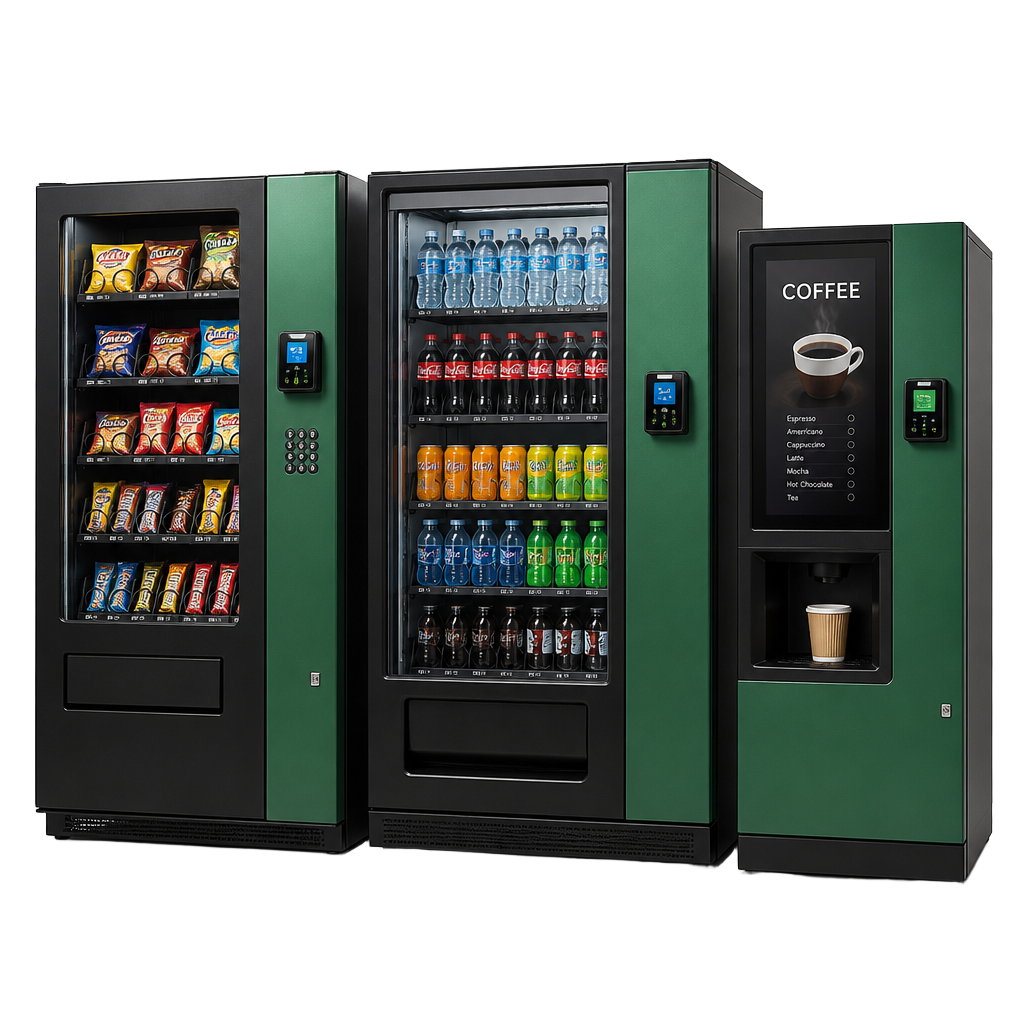
Use illustrative figures, then replace them with real quotes. As a rough 2026 guide, used or refurbished snack, drink and combo machines commonly range from $1,800 to $5,000+, new combination machines from $9,000 to $16,000, new smart fridges and smart coolers from $8,800 to $15,000, and fresh-food or pizza vending machines from $25,000. Add a cashless card reader and telemetry — now close to standard, because cashless lifts average transaction values and telemetry stops you driving to a full machine.
The test that matters is vends per day. If a machine is financed at roughly $80 per week and your average gross margin is about $1.20 per vend, you need in the order of ten vends a day just to cover the repayment, before stock runs, fuel and shrinkage. A 40-person office typically supports that; a 12-person workshop usually does not. Run your own figures through the finance calculator before you commit to a site, and treat any site that only works on best-case assumptions as a site that does not work.
Two habits separate operators who scale from operators who stall. First, keep repayments and restocking money in separate accounts, so equipment cost is never funded out of stock float. Second, judge each machine on its own site performance monthly and move underperformers early — relocating a machine is cheap compared with carrying a dead site for a year.
What lenders look at
Credit teams generally look at your ABN and GST registration history, credit file and repayment conduct, bank statement conduct, whether you own property, the equipment itself (new or used, dealer or private, age and condition) and the amount relative to your profile. New ABNs are financeable in many cases, particularly for smaller single-machine facilities. Adverse credit is not automatically fatal, though it narrows the field. Each lender sets its own criteria and we are not privy to them, so nothing here is an approval or a guarantee — see our terms for how our referral role works.
Nationwide coverage — capital cities to rural towns
Sites and demand drivers differ sharply by region. Sydney and Melbourne are dense office and hospital markets with real competition for premium sites. Perth, Mackay, Gladstone, Mount Isa and Kalgoorlie run on resources, shift work and camp facilities, where 24-hour crib rooms make vending close to essential. Cairns, the Gold Coast, Sunshine Coast and Mildura swing with tourism and harvest seasons. Regional centres such as Dubbo, Tamworth, Bendigo, Shepparton, Bunbury and Devonport tend to have less operator competition, longer site tenure and lower churn — often the better place to build a first route, provided the drive time between machines is honest.
We arrange finance for operators everywhere in Australia, including remote sites. Pick your area for local detail:
See the full locations hub for every city, town and state we cover.
Getting started
- Confirm the site: headcount, access hours, power, and who signs off.
- Get a written equipment quote including card reader and delivery.
- Sanity-check vends per day against the repayment, then apply online — about five minutes, no obligation.
- We match your profile to suitable lenders; you compare what comes back.
- On settlement the supplier is paid, the machine is installed, and the site starts trading.
Frequently asked questions
What is vending machine finance in Australia?
Vending machine finance is equipment finance used to acquire vending machines and related assets — drink, snack, combination, coffee, fresh food, PPE and smart cashless machines. A financier funds the purchase and you repay over a fixed term, usually two to five years, while the machine earns from day one. Common structures include chattel mortgage, finance lease, rental or operating lease, commercial hire purchase and rent-to-own.
How much can I borrow to finance vending equipment?
Facilities commonly range from about $5,000 for a single reconditioned machine up to $250,000 or more for a multi-machine route, micro markets or a route acquisition. The amount available depends on the equipment, your ABN and credit profile, and each lender's own criteria, which we are not privy to.
Can I get vending finance as a new ABN with no financials?
Often yes. Low-doc and new-ABN options exist for smaller amounts, assessed on your ABN and GST status, credit file, bank conduct and sometimes property ownership rather than full financial statements. Larger facilities usually require financials. No outcome can be guaranteed.
Does vending finance cover used machines and route purchases?
Frequently, yes. Used machines are financeable subject to age, condition and valuation, and dealer-sourced equipment is generally easier than private sales. Route acquisitions can often be funded where the machines are identifiable assets, with goodwill treated separately.
Is a vending machine a tax deduction?
The finance structure you choose affects how repayments, interest, depreciation and GST are treated, and treatment differs between a chattel mortgage, a lease and a rental. We do not give tax advice — confirm your position with your accountant or registered tax agent.
How long does approval take?
Straightforward low-doc applications are frequently assessed within 24 to 48 hours, with settlement following once documents and supplier invoices are in. More complex or larger facilities take longer. Timeframes are set by the lender, not by us.
Ready to finance vending equipment?
Apply online for a no-obligation look at your options, or call and talk it through first.
Lender panel
Lenders across our referral network
Banks, non-banks and specialist equipment financiers active in Australian business lending. We match your application to lenders who may fit your situation.
Logos are the property of their respective owners and are shown for identification only. VendingFinance is a referral service, not a lender or broker. Inclusion here is not an endorsement, an offer of credit, or a guarantee of approval — each lender sets its own criteria.
Secure yourRent to Own
Get vending machines on the road now and own them at the end of the term. New and established operators, Australia-wide — no financials required in many cases.
0% down options
Instant approval for qualified fleets