
Equipment finance explained
Chattel mortgage in Australia: how it actually works
The most common way Australian businesses fund equipment, explained without the jargon — ownership, GST, balloons, worked examples, and where it beats a lease.
The short answer
A chattel mortgage is a business loan used to buy equipment outright. You own the asset from day one and the lender registers a security interest over it until the loan is repaid. It is the most common structure for funding vehicles, machinery and vending equipment in Australia.
Primary citations
Chattel mortgage is one of those terms that sounds far more complicated than the thing it describes. Strip the language back and it is simply this: a loan to buy a piece of business equipment, where the equipment itself is the security. You own it from the day it is delivered, the lender holds a registered interest over it until you have paid, and when the last payment clears that interest is released. Nothing changes hands at the end because nothing needed to — it was always yours.

What is a chattel mortgage?
A chattel mortgage is a loan where a business buys equipment outright and the lender takes a registered security interest over that equipment until the loan is repaid. Ownership sits with the borrower from settlement, which is the key difference from a lease or rental.
"Chattel" is an old legal word for a movable item of property — a van, a forklift, an excavator, a vending machine. "Mortgage" means the item secures the debt. Put them together and you have a purchase loan secured by the very thing you are buying, the same way a home loan is secured by the house.
The lender registers that interest on the Personal Property Securities Register, which is a public database anyone can search. That registration is why chattel mortgage rates are usually lower than unsecured business loans: if the borrower stops paying, the lender has a defined, recoverable asset rather than a queue of general creditors.
In practice the sequence is: you choose the equipment and get a written quote, the lender approves you against the asset and your business, the lender pays the supplier directly, and you start repaying. The invoice is in your business name from the beginning.
Chattel mortgage vs lease vs rent-to-own
A chattel mortgage buys the asset now. A lease rents it with a residual to settle later. Rent-to-own rents it with a defined path to ownership. The right one depends on whether you want the asset on your balance sheet and how certain you are you will keep it.
These three structures are not better or worse than each other; they solve different problems, and the honest answer to "which should I use" is that it depends on cash flow, how long you will keep the asset, and how your accountant wants it treated.
| Chattel mortgage | Lease / rental | Rent-to-own | |
|---|---|---|---|
| Who owns it during the term | You | The financier | The financier |
| Security taken | Registered over the asset | Financier already owns it | Financier already owns it |
| End of term | Nothing to do — already yours | Pay residual, refinance, or hand back | Defined purchase or final payment |
| Typical entry cost | Deposit optional | Often nil deposit | Often nil deposit |
| Best suited to | Assets you will keep long term | Assets you may upgrade or return | Newer businesses building a track record |
How the three main structures differ in practice
GST, balloons and the numbers that confuse people
Under a chattel mortgage the business buys the asset, so the GST treatment follows the purchase rather than the repayments. A balloon is a lump sum deferred to the end of the term that lowers monthly payments but increases total interest.
Because the borrower is the purchaser, GST attaches to the purchase of the equipment rather than being spread across each repayment the way it can be under some rental arrangements. How and when a GST-registered business accounts for that depends on its reporting method, which is exactly the kind of detail worth ten minutes with an accountant rather than ten minutes on a forum. The ATO publishes the rules; we have linked them below rather than paraphrasing them.
A balloon (sometimes called a residual) is a portion of the loan deliberately left unpaid until the final month. Say you finance $30,000 over five years with a $6,000 balloon: your monthly payment is calculated on a smaller amortising balance, so it drops noticeably, but $6,000 plus its accumulated interest is still waiting for you at the end. Balloons are a cash-flow tool, not a discount. Used well they keep a young business liquid; used carelessly they create a bill nobody budgeted for.
The other number people misread is the term. Stretching a five-year loan to seven lowers the payment and raises the total cost, and on equipment with a shorter working life it can leave you still paying for a machine you have already replaced. Match the term to how long the asset will actually earn.
Worked example: $30,000 of equipment
On $30,000 financed over 60 months at an indicative 10% p.a. with no balloon, repayments work out around $637 a month, or roughly $147 a week. Adding a 20% balloon lowers the monthly figure but leaves a lump sum at the end.
The figures below are arithmetic, not an offer. We are a referral marketplace, not a lender or broker, and the actual rate, term and approval always sit with the lender. They are here so you can see the shape of the decision rather than guess at it.
| Amount financed | Term | Balloon | Monthly (approx.) |
|---|---|---|---|
| $15,000 | 48 months | Nil | $380 |
| $30,000 | 60 months | Nil | $637 |
| $30,000 | 60 months | 20% ($6,000) | $539 |
| $50,000 | 60 months | Nil | $1,062 |
| $80,000 | 60 months | 20% ($16,000) | $1,437 |
Illustrative only — 10% p.a., principal and interest, no fees included
What lenders look at
Most equipment lenders assess the asset, the length and conduct of the ABN, credit history, and whether the business can demonstrate capacity to repay. Property-owning directors and newer, more valuable assets generally attract better terms.
Commercial equipment finance to a business is assessed differently from consumer credit, and the criteria vary widely between lenders. That variation is the whole reason a referral process exists: the same application can be a decline at one lender and straightforward at another purely because of asset type or ABN age.
- Asset type and age — newer, standard, easily resold equipment is simpler to fund than niche or very old gear.
- ABN and GST registration history — how long the entity has actually been trading, not just registered.
- Credit file — both the entity and the directors.
- Property ownership — often the single biggest lever on rate and on whether low doc is available.
- Deposit or trade-in — reduces the amount at risk and can widen the lender pool.
- Existing commitments — what else is already secured against the business.
Where this applies to vending equipment
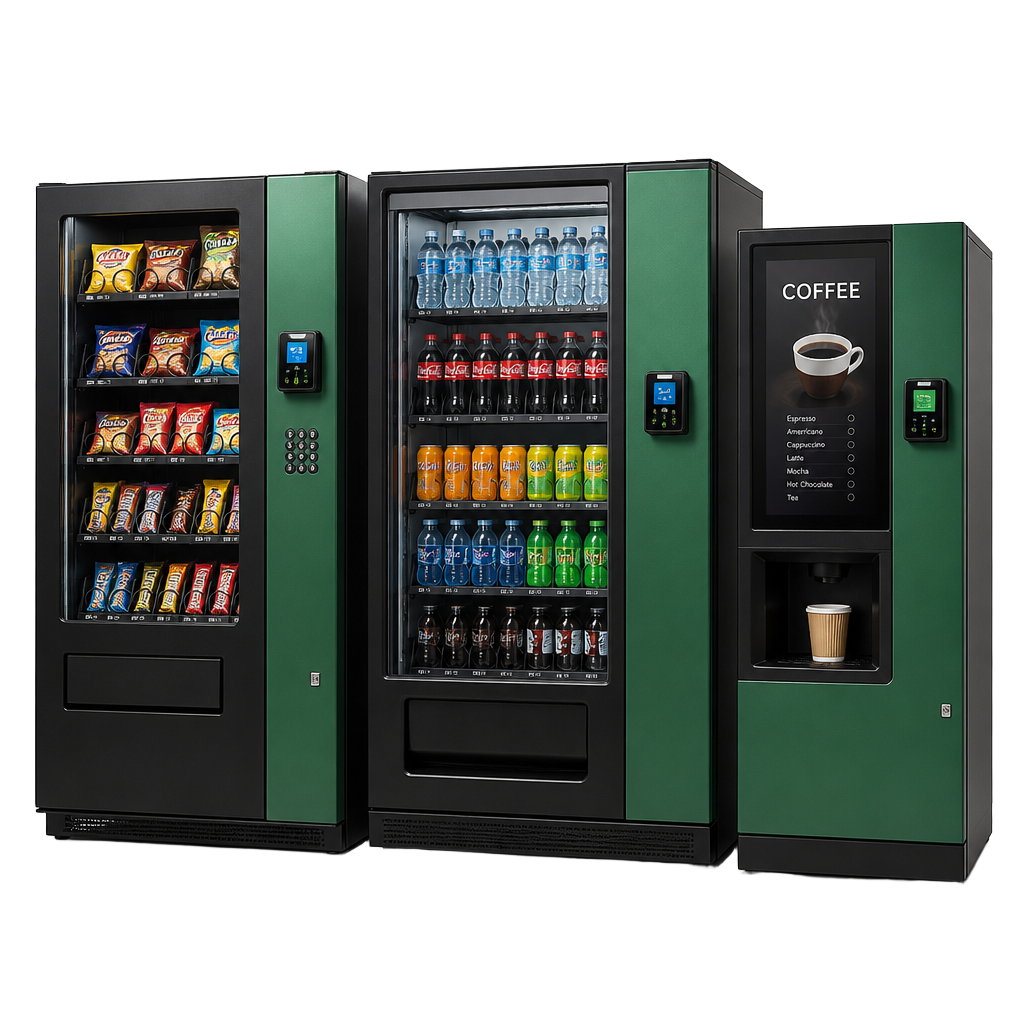
Chattel mortgage suits vending operators who intend to keep machines on long-term sites, because the machines are owned assets from day one and the loan can cover cashless readers, telemetry and installation in the same facility.
Vending is a good illustration of when ownership beats renting. A machine on a stable site can trade for a decade with basic servicing, so paying a rental premium indefinitely on an asset you would never hand back makes little sense. Operators building a route usually own their core machines and use rental or rent-to-own selectively — for a trial site, a seasonal placement, or when the business is too new to qualify for a purchase facility.
One practical point specific to this industry: the machine alone is not the cost. Card readers, telemetry, delivery, installation and signage are all part of getting the asset earning, and most of them can be included in the same facility rather than paid out of working capital. Our cost guide breaks those numbers down, and the calculator turns any purchase price into a weekly repayment.
Frequently asked questions
Who owns the equipment under a chattel mortgage?
The business does, from settlement. The lender does not own the asset; it holds a registered security interest over it on the PPSR, which is released once the loan is repaid.
Is a chattel mortgage the same as a hire purchase?
No. Under a chattel mortgage you own the asset from the start. Under a hire purchase the financier retains title and ownership transfers only after the final payment. The GST and accounting treatment differ, so confirm the structure with your accountant before signing.
Can I pay a chattel mortgage out early?
Usually yes, but most agreements include an early termination or break cost, because the lender priced the deal on the full term. Ask for the payout figure and the break cost in writing before you sign, not after.
Do I need a deposit for a chattel mortgage?
Not always. Many equipment lenders will fund the full purchase price for an established business with clean credit. A deposit generally improves the rate and widens the number of lenders willing to look at the deal.
Is a chattel mortgage tax deductible?
We do not give tax advice and no one should promise you a deduction. In general terms, interest and depreciation on a business asset are dealt with under the ATO's rules, which we have linked in the sources below. Your accountant should confirm what applies to your entity.
What happens if I sell the equipment before the loan ends?
The security interest has to be discharged, which normally means paying the loan out from the sale proceeds. Selling secured equipment without clearing the finance creates a serious problem for both you and the buyer.
Prefer to rent first?
If a traditional loan is not the right fit yet, rent to own keeps the machine working while you build a trading history:
Lender panel
Lenders across our referral network
Banks, non-banks and specialist equipment financiers active in Australian business lending. We match your application to lenders who may fit your situation.

Logos are the property of their respective owners and are shown for identification only. VendingFinance is a referral service, not a lender or broker. Inclusion here is not an endorsement, an offer of credit, or a guarantee of approval — each lender sets its own criteria.
Ready to price your machine?
Tell us the equipment and your situation once. We match you to lenders who may fit — it takes about five minutes and there's no obligation.
Keep reading
Who wrote and checked this page
David Barnes
Founder, Vending Finance
Has worked with Australian vending operators and equipment funders for years, matching operators to lenders who fit their situation. Writes and checks every guide on this site against the regulator, ATO and ABS pages cited below.
- Every figure is either an indicative market range we label as such, or traceable to a primary source listed below. We are a referral service, not a lender or broker, and we never give tax advice.
- Sources and figures on this page last checked August 2026. Spotted something out of date? Call 0412 025 552.
Sources & further reading
Every figure and rule on this page can be checked against a primary source. Links open the publisher's own page so you can verify it yourself.
- Australian Taxation Office — GST and hire purchase
How GST is treated on hire purchase and similar equipment finance arrangements. Checked August 2026.
- Australian Taxation Office — Depreciation and capital expenses and allowances
How the cost of business equipment is claimed over its effective life. Checked August 2026.
- Australian Taxation Office — Instant asset write-off for eligible businesses
Current thresholds and eligibility rules for immediately deducting the cost of an asset. Checked August 2026.
- Australian Financial Security Authority — Personal Property Securities Register
Checking whether second-hand equipment or a vending route carries an existing security interest. Checked August 2026.
- ASIC — Credit licensees
The distinction between regulated consumer credit and commercial lending to businesses. Checked August 2026.
- Reserve Bank of Australia — Interest rates statistics
The published lending rate environment our indicative ranges sit against. Checked August 2026.
- ACCC — Unfair contract terms
Small business protections when reviewing a finance or site contract. Checked August 2026.

Secure yourRent to Own
Get vending machines on the road now and own them at the end of the term. New and established operators, Australia-wide — no financials required in many cases.
0% down options
Instant approval for qualified fleets