
Vending machine finance — Bundaberg, QLD
Vending Machine Finance Bundaberg
Bundaberg's diverse economy presents a solid opportunity for vending machine operators. The region is a hub for agriculture, food processing, and healthcare, all sectors with consistent demand for on-site refreshments. Major employers in food and drink manufacturing, along with significant agricultural operations, rely on shift workers who need 24/7 access to snacks and drinks. The city's two major hospitals, Bundaberg Hospital and the Mater Private Hospital, have a constant flow of staff, patients, and visitors at all hours. Furthermore, the growing education sector, anchored by CQUniversity and TAFE Queensland campuses, provides a captive audience of students and staff. A well-placed vending machine business can service these varied locations, from industrial workshops and farm packing sheds to healthcare waiting rooms and educational facilities, providing a valuable and convenient service across the region.
Wide Bay–Burnett
We finance vending machines right across Bundaberg and the surrounding QLD area.
All machine types
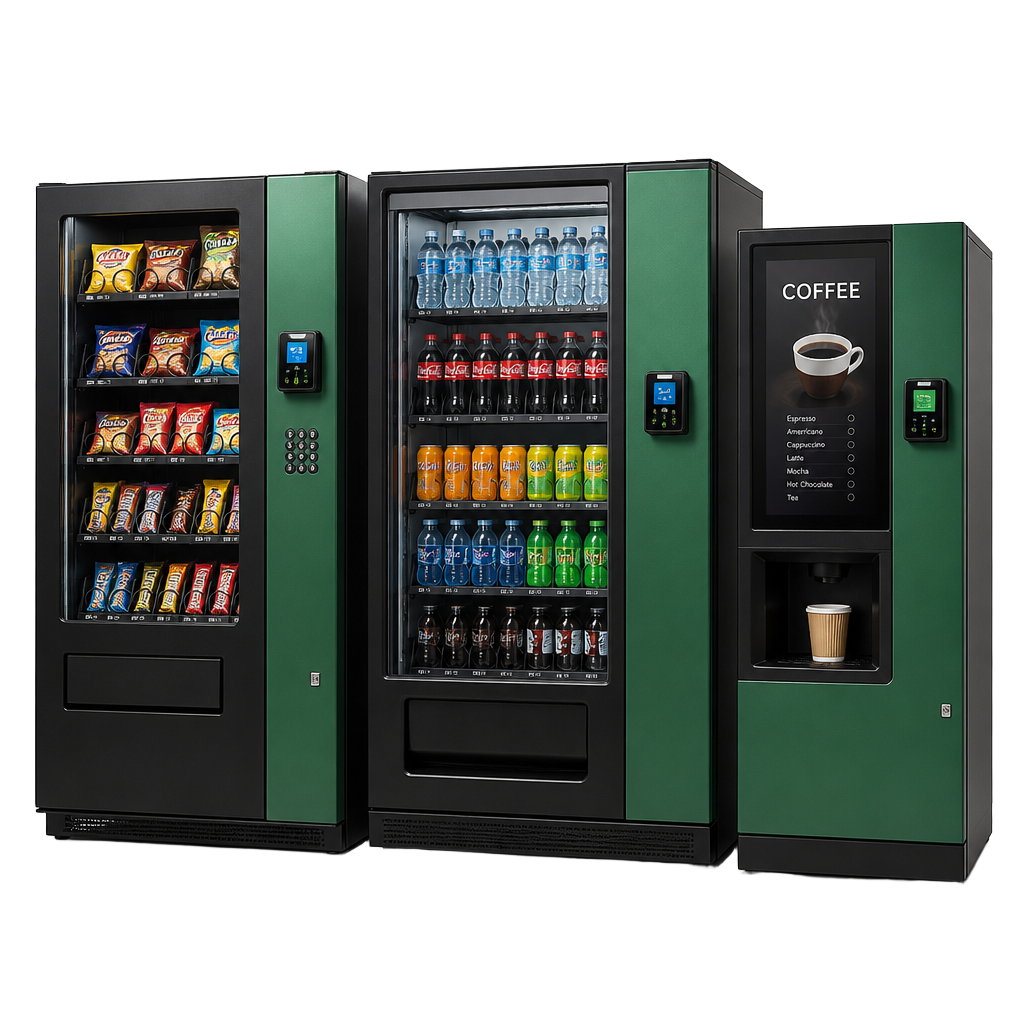
Drink, snack, combination, coffee, PPE and smart machines — new or used, one unit or a fleet.
New starts welcome
You don't need years of trading history. In many cases no financials are required.
Vending machine finance in Bundaberg
Bundaberg's diverse economy presents a solid opportunity for vending machine operators. The region is a hub for agriculture, food processing, and healthcare, all sectors with consistent demand for on-site refreshments. Major employers in food and drink manufacturing, along with significant agricultural operations, rely on shift workers who need 24/7 access to snacks and drinks. The city's two major hospitals, Bundaberg Hospital and the Mater Private Hospital, have a constant flow of staff, patients, and visitors at all hours. Furthermore, the growing education sector, anchored by CQUniversity and TAFE Queensland campuses, provides a captive audience of students and staff. A well-placed vending machine business can service these varied locations, from industrial workshops and farm packing sheds to healthcare waiting rooms and educational facilities, providing a valuable and convenient service across the region.

Suburbs and precincts we finance machines into
We regularly arrange finance for operators placing machines in Bundaberg Central, Bundaberg East, Bundaberg South, Bundaberg West, Avenell Heights, Avoca, Kalkie, Kepnock, Millbank, Svensson Heights, Thabeban and Kensington.
Running a route beyond the metro area? We also cover Bargara, Childers, Gin Gin, Elliott Heads, Woodgate, Moore Park Beach from the same Bundaberg base — one facility can fund machines across the whole route.
What drives vending demand in Bundaberg
- Bundaberg Hospital & healthcare facilities
- Agricultural packing sheds & farms
- Food & beverage manufacturing sites
- CQUniversity & TAFE campuses
- Transport and logistics depots
- Tourism hubs and seasonal worker accommodation
The Bundaberg Market: Where to Place Your Machines
Success in Bundaberg’s vending market means understanding its economic drivers. The city is not just a regional centre but a powerhouse in food production and healthcare. Consider the large workforces at food processors like Bundaberg Brewed Drinks or the numerous facilities supporting the sugar cane industry. These sites often run multiple shifts, meaning staff need access to food and drink outside of standard retail hours. Placing machines in staff break rooms at these locations provides a no-cost, high-value amenity for the employer. Likewise, the logistics and light industrial businesses in areas like the Kensington Industrial Estate have teams that appreciate the convenience of on-site refreshments. Look for businesses with over 30 staff members who lack a full-service canteen; these are your prime targets for placement.
Beyond industry, healthcare and education are key pillars. Bundaberg Hospital and the Mater Private Hospital are 24/7 environments with a constant need for vending services in waiting areas, staff rooms, and public thoroughfares. These locations offer high foot traffic and a clear need for convenience. Similarly, the CQUniversity Bundaberg campus and local TAFE Queensland sites concentrate hundreds of students and staff in one area, many of whom are on-site for long hours of study or teaching. Even seasonal opportunities exist, such as placing machines in accommodation for agricultural workers during the harvest season or at busy tourist information centres. A diverse portfolio of sites across industrial, healthcare, and educational sectors can create a stable and resilient vending operation in the Wide Bay region.
Managing a Regional Route from Bundaberg
Operating a vending route across the Wide Bay–Burnett region involves logistical challenges distinct from a dense metropolitan area. The cost of fuel and vehicle maintenance is a significant operational expense, as your route may extend to Childers, Gin Gin, and coastal towns like Bargara. Each trip to restock a machine or collect cash must be as efficient as possible. This is where modern vending technology becomes essential. Equipping your machines with telemetry systems allows you to monitor stock levels remotely from your home or office in Bundaberg. You can see in real-time which products are sold out and which are not moving, enabling you to plan restocking runs based on actual need rather than a fixed schedule. This data-driven approach minimises wasted trips, saves considerable time and fuel, and ensures machines remain well-stocked.
Integrating cashless payment readers is another critical strategy for regional operators. These systems not only cater to the increasing number of customers who don't carry cash but also provide valuable sales data that feeds into your telemetry platform. The combination of cashless payments and remote monitoring transforms the efficiency of a regional route. It reduces the need for manual cash collection, lowering security risks and administrative overhead. For a Bundaberg-based operator, this technology means you can service a wider geographic area more profitably. Instead of driving to a machine just to find it half-full, you can focus your time on high-demand sites, optimising inventory and maximising revenue per visit. Investing in this technology from the outset is a key factor in building a scalable business.
Finance Structures for Regional Vending Businesses
Acquiring vending machines, whether new or used, represents a significant capital outlay. Equipment finance provides a way to manage this cost by spreading it over time, preserving your working capital for stock and operational expenses. Several finance structures are commonly used. A chattel mortgage, for example, is a type of equipment loan where you take ownership of the machine from the start, and the lender takes a mortgage over the asset. This can have specific tax implications for businesses that should be discussed with a qualified accountant. Another option is a finance lease, where the lender owns the machine and leases it to you for a fixed term. At the end of the term, you may have the option to purchase the equipment or continue leasing.
For new operators or those wanting to test the market with minimal upfront commitment, a rent-to-own agreement can be a flexible entry point. This structure allows you to rent the machine for a period, with a portion of your rental payments contributing towards eventual ownership. It often has a lower barrier to entry than traditional loans. The choice between financing new versus high-quality, refurbished machines is also a key consideration. Used equipment can significantly lower your initial investment, allowing you to deploy more machines faster. Many lenders offer finance for both new and second-hand assets, provided they are in good working order. Understanding these different pathways can help you structure your investment in a way that aligns with your business plan and cash flow realities.
Getting Started: Site Agreements in Bundaberg
Securing your first few sites is the most critical step in launching your vending business. In Bundaberg, this involves professional and direct communication with local business owners and site managers. Your approach should not be a hard sell, but rather a proposal to provide a valuable, no-cost service for their employees or customers. Research potential sites in areas like the East Bundaberg industrial precinct or agricultural packing facilities. When you approach a manager, be prepared to explain the benefits: improved staff morale, convenience for shift workers, and zero cost or effort for the host business. Emphasise that you handle all aspects of installation, stocking, and maintenance. Offering a modern, reliable machine with cashless payment options can be a strong selling point, as it demonstrates professionalism and a focus on user experience.
The conversation should be a partnership. Ask the site manager about their staff's preferences. Would they prefer healthier options, energy drinks for late shifts, or classic snacks? Tailoring your product selection to the specific workplace shows that you are a responsive and customer-focused vendor. It’s also wise to have a simple, clear site agreement document ready. This isn't a complex legal contract but a straightforward document outlining responsibilities: you provide and service the machine, and they provide the space and electricity. A verbal agreement can work, but a written one adds a layer of professionalism and clarity for both parties. Building a reputation for reliability and excellent service at your first few sites will lead to positive word-of-mouth referrals, the most effective way to grow your business in a close-knit regional community.
Lender criteria, in plain English
Use this to self-qualify before you apply from Bundaberg. These are the things lenders commonly weigh up — each lender sets its own rules and we're not privy to their internal scorecards, so treat it as a preparation guide rather than a promise.
| What they look at | Typical expectation | What that actually means | What helps |
|---|---|---|---|
| ABN age | Any age considered; 12+ months opens more options | How long your ABN has been registered. A brand-new ABN doesn't rule you out, it just narrows the list of lenders willing to look. | Register the ABN before you shop for machines, even if you start small. |
| GST registration | Often expected once turnover approaches $75,000 | Whether you're registered for GST. Some lenders treat GST registration as a sign the business is trading properly rather than a hobby. | Make sure what you tell the lender matches your ATO record. |
| Credit history | Clear file preferred; defaults assessed case by case | Your personal and business credit file. Paid or small defaults are often explainable — unexplained recent arrears are the hard part. | Pull your own credit file first so nothing surprises you mid-application. |
| Deposit or trade-in | $0 to 20% depending on the equipment and your profile | Money you contribute up front. A deposit reduces the amount financed and can offset a thin trading history. | Even a small deposit gives a lender a reason to say yes. |
| Equipment type and age | New and used both financed; older used units scrutinised | Lenders lend against the machine. Newer, saleable, cashless-ready equipment is easier to fund than a 15-year-old mechanical unit. | Get the make, model, year and serial numbers before you apply. |
| Site or placement plan | Named site preferred, especially for new operators | Where the machine will actually go and who has agreed to host it. A machine in a shed earns nothing, and lenders know it. | Have at least one site confirmed, in writing if possible. |
| Property ownership | Not required, but improves options | Whether you or a director own property. It isn't a requirement for equipment finance, but it widens the field. | Mention it up front if you do — it can change the structures offered. |
| Documents (low doc vs full doc) | ID + ABN for low doc; statements or financials for larger amounts | Smaller amounts are often assessed on identity and equipment alone. Bigger facilities usually mean bank statements or financials. | Have 3–6 months of business bank statements ready either way. |
| Serviceability | Repayment should be comfortably covered by expected takings | Whether the machine's expected sales cover the repayment plus stock and running costs. This is where your numbers matter most. | Run our profit calculator and bring the figures with you. |
Not sure where you sit? Start the application and we'll tell you honestly which lenders are worth approaching — and if none are today, what to fix first.
How to get vending machine finance in Bundaberg
- Complete the online application — about five minutes, no obligation.
- We assess it and match you to the lender best suited to your Bundaberg operation.
- Once approved, finance is settled so you can buy the machines and get them trading.
Free download
The Vending Machine Finance Checklist — Bundaberg
Four pages of A4: how to self-qualify, what to pin down about the machine and the cashless reader, the site numbers lenders ask about, and the contract terms worth reading twice. Print it, or email it to your accountant.
Frequently asked questions — Bundaberg
Bundaberg's economy has distinct peaks tied to agriculture and tourism. During the cane harvesting season or fruit picking seasons, demand can surge at farms and packing sheds. Likewise, the summer turtle nesting season at Mon Repos increases visitor traffic. A smart operator adjusts stock levels and service frequency to match this demand, potentially placing temporary machines at seasonal work camps or busy tourist spots to capture this additional revenue.
Ready to finance machines in Bundaberg?
Apply online or call for a no-obligation chat. We help operators right across Queensland.
Next steps
Where Bundaberg operators usually go from here.
Or read the state overview: vending machine finance in Queensland.
Run your numbers
Vending machine finance Australia
The full national guide: structures, costs, deposits and what lenders look for.
Every city and town we cover
Metro and regional pages across all states and territories.
Other Queensland locations we finance
Finance options Bundaberg operators ask about
Each guide below is the main page we keep updated for that topic, so you are reading current numbers rather than one of several near-identical pages.
- Vending machine finance AustraliaMain guide · Bundaberg
- Vending machine lease AustraliaMain guide · Bundaberg
- Rent to own vending machinesMain guide · Bundaberg
- 100% tax deductible vending leaseMain guide · Bundaberg
- Chattel mortgage AustraliaMain guide · Bundaberg
- Vending machine rental with option to buyDetailed guide · Bundaberg
Related cities and regions
Running a route that crosses Wide Bay–Burnett? One facility can fund machines in more than one area — these are the nearby places we finance vending equipment into.
Queensland guides — leasing, rent-to-own and tax
The same machine can be leased, rented-to-own or bought outright, and the paperwork differs. These QLD guides explain each option with local examples.
- Vending machine lease in Queensland Estimate the monthly payment and how many sales a day cover it.
- Rent-to-own vending machines in Queensland Work out a weekly rent-to-own payment and the total cost over the term.
- The "100% tax deductible" vending lease in Queensland See the payment first — then take the numbers to your accountant.
Secure yourRent to Own
Get vending machines on the road now and own them at the end of the term. New and established operators, Australia-wide — no financials required in many cases.
0% down options
Instant approval for qualified fleets