
Hire now, own at the end
Commercial Hire Purchase (CHP) for Australian Business Equipment
Understand how a Commercial Hire Purchase works in Australia, from PPSR title rules to GST claims, repayment structures, and end-of-term ownership transfer.
Quick answer
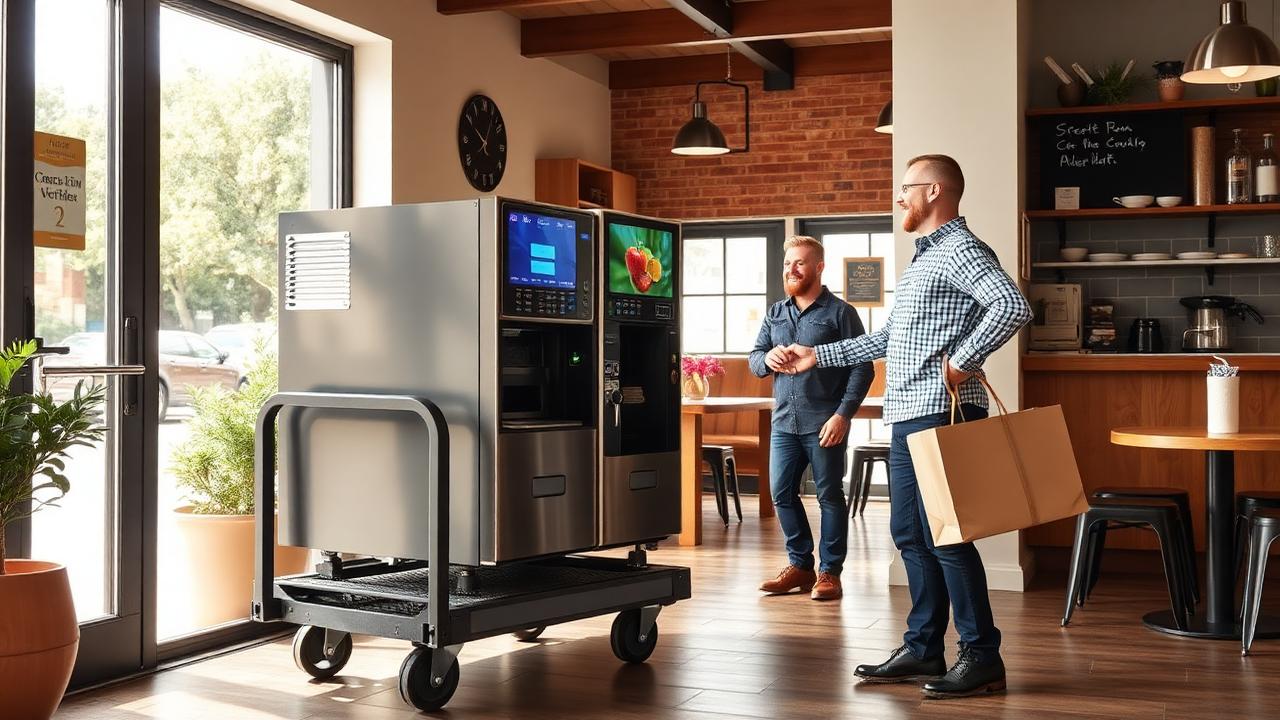
A Commercial Hire Purchase (CHP) is an Australian equipment finance structure where a lender buys equipment and hires it to a business for fixed monthly payments. The business gains immediate operational use, while legal title transfers automatically upon payment of the final installment or balloon amount.
A Commercial Hire Purchase (CHP)—historically referred to as an offer to hire—is an established equipment finance structure used by Australian businesses to acquire commercial machinery, vehicles, and equipment. Under a CHP agreement, the financier purchases the required business equipment on your behalf and hires it back to your business over an agreed term. Your business exercises full operational control from day one, using the revenue-generating asset to drive commercial income. Upon making the final scheduled payment—including any agreed balloon residual—legal title automatically transfers from the lender to your business. It offers a structured path to full equipment ownership while preserving working capital.
Why Equipment Is a Revenue-Producing Asset Rather Than a Cost
In modern commercial operations, equipment finance should not be viewed merely as an operational cost, but as an engine for business growth. Commercial equipment—ranging from smart automated vending machines and food service technology to heavy machinery and transport fleets—serves as a primary revenue-producing asset. When a business acquires equipment as a business asset, it instantly unlocks productive capacity, enables service expansion, and generates predictable daily or monthly cash inflows. Financing this equipment via a Commercial Hire Purchase allows companies to match the asset's cost against the income it produces. Rather than tying up working capital in upfront capital expenditure, businesses deploy capital efficiently, letting the revenue generated by the equipment cover its own financing costs over time.
How the Commercial Hire Purchase Structure Works Step by Step
A Commercial Hire Purchase agreement follows a clear, step-by-step transaction workflow designed to get commercial equipment operating in your business quickly and efficiently:
- Asset Selection: Your business identifies the specific equipment required from an eligible supplier or manufacturer.
- Application & Referral: You submit an application through Vending Finance, where we present your profile to our panel of commercial equipment lenders.
- Financier Purchase: Upon approval and document signing, the selected lender purchases the equipment directly from the vendor.
- Hiring Period: The financier hires the asset to your business over a fixed term (typically 24 to 84 months) in exchange for regular repayments.
- Operational Deployment: Your business takes delivery and uses the equipment immediately to generate commercial revenue.
- Title Transfer: Once all monthly installments and any final balloon residual are fully paid, the financier releases the title, transferring legal ownership to your business.
Ownership Rights, PPSR Registrations, and Title Transfer
During the term of a Commercial Hire Purchase, legal ownership and operational rights are distinct. The financier retains legal title to the equipment as security for the financed amount. To protect their financial interest, the lender registers an interest on the Personal Property Securities Register (PPSR). Meanwhile, your business holds full possession and operational rights, allowing you to deploy, manage, and generate income from the asset. On the PPSR, this registration shows prospective creditors that the equipment is encumbered under an offer to hire contract. Once the contract terms are satisfied and the final payment clears, the lender removes the PPSR registration and formal legal title passes entirely to your business entity.
GST and Accounting Treatment for Commercial Hire Purchase
The accounting and GST treatment of a Commercial Hire Purchase in Australia depends on your accounting methods and business reporting structure. Generally, under accrual accounting, businesses can claim the Input Tax Credit (ITC) for the full GST amount included in the equipment purchase price on their next Business Activity Statement (BAS). GST is not charged on the monthly principal repayments; however, GST applies to the interest charges and ongoing service fees over the contract term. Depreciation claims and interest deductions may also be allowable depending on how the asset is classified on your balance sheet under relevant accounting standards like AASB 16. Because individual tax outcomes vary based on your ABN structure, always consult your registered tax agent or qualified accountant for tailored advice.
Typical Terms, Balloon Options, and End-of-Term Outcomes
Commercial Hire Purchase agreements in Australia are highly customizable to align with seasonal cash flow and asset lifecycles. Contract terms commonly range from 12 to 84 months, with 36 to 60 months being the standard for small business equipment and vending operations. Repayments are structured on a fixed monthly, quarterly, or tailored seasonal basis. Businesses can elect to incorporate a balloon payment (also known as a residual value) at the end of the term. A balloon payment reduces regular monthly cash commitments by deferring a agreed percentage of the principal to contract completion. At term end, the business can pay the balloon from cash reserves, sell the equipment, or apply to refinance the residual amount into a new business equipment loan.
Documentation Required by Australian Business Lenders
To assess a Commercial Hire Purchase application, lenders on our panel evaluate your business's credit profile, trading history, and asset cash flow potential. Depending on whether you qualify for full-doc or streamlined low-doc equipment finance options, required documentation typically includes:
- Active Australian Business Number (ABN) and GST registration details
- Identification documents (Driver's Licence or Passport) for business directors or sole traders
- Recent business bank statements (typically 3 to 6 months)
- Detailed tax returns and Accountant-Prepared Financial Statements for full-doc assessments
- Equipment tax invoice or formal quote detailing serial numbers and supplier details
Illustrative Example: Commercial Hire Purchase Calculation
To illustrate how a Commercial Hire Purchase operates in practice, consider the following hypothetical example (for illustrative purposes only): A vending machine operator purchases a smart multi-combination vending system costing $12,000 including GST ($10,909 base price + $1,091 GST). Under a 36-month CHP with a 20% balloon ($2,400) and an illustrative fixed rate, the monthly repayment might be approximately $320 per month. Operating on an accrual accounting basis, the business may claim the $1,091 GST credit upfront on its next BAS. Over 3 years, the machine generates $800 per month in net profit, easily covering the $320 monthly repayment. At month 36, the business pays the $2,400 balloon payment, the lender clears the PPSR registration, and full legal ownership transfers to the operator.
Advantages and trade-offs at a glance
Advantages
- Immediate commercial use of equipment while spreading acquisition costs over fixed repayment schedules tailored to cash flow
- Automatic transfer of full legal ownership upon payment of the final installment or balloon without needing contract renegotiation
- Fixed interest rates and predictable monthly payments shield operational budgets from interest rate volatility over the term
- Flexible terms up to seven years with options for balloon payments to lower ongoing cash outflows
- GST on the capital cost can typically be claimed upfront on the next BAS for businesses using accrual accounting
Things to weigh up
- Legal title remains with the financier until the final payment and any balloon component are fully cleared
- GST on the interest component and monthly fees is payable over the life of the agreement rather than upfront
- Early termination or payout before the agreed contract end date may incur early exit fees from the lender
Who this structure suits
- Established Australian businesses looking to acquire long-term revenue-generating equipment with guaranteed eventual ownership
- AASB 16 reporting entities seeking structured hire contracts that establish clear asset equity over time
- Commercial operators purchasing vending machines, transport assets, or specialized machinery intended for multi-year service
- Businesses operating on accrual accounting aiming to claim GST input tax credits on the purchase price upfront
How it compares with the other structures
A Commercial Hire Purchase (CHP) differs from a chattel mortgage primarily in legal title timing: under a chattel mortgage, the business takes legal ownership immediately at settlement while the lender registers a mortgage over the asset. Under a CHP, the lender retains legal title throughout the term and transfers it to the business only after the final installment or balloon payment is settled. Compared to a finance lease or operating lease, where assets are rented without automatic ownership transfer, a CHP guarantees title transfer upon completion. Operating leases suit businesses wanting off-balance-sheet arrangements or regular equipment upgrades without ownership, whereas CHPs suit entities intending to retain equipment long-term as core revenue-generating business assets. Select a CHP when guaranteed eventual title, fixed repayments, and upfront GST input tax credit claims align with your accounting framework, or opt for a chattel mortgage if immediate title ownership at day one is required by your corporate structure.
Work out your repayments
Use our calculators to sanity-check the numbers before you apply. Repayment guidance is indicative only — the lender you are matched with sets the final rate, term and fees.
Frequently asked questions
Who holds title to the equipment during a Commercial Hire Purchase?
Under a Commercial Hire Purchase, the financier holds legal title to the asset during the contract term. Your business holds operational control and equity rights. Full legal ownership transfers automatically to your business once all regular repayments and any final balloon payment are fully settled.
How is GST treated under a Commercial Hire Purchase in Australia?
For businesses operating on an accrual accounting basis, GST on the initial equipment purchase price is generally claimable upfront on the next Business Activity Statement (BAS). GST on interest charges and monthly processing fees is applied to individual repayments over the contract term. Always verify with your qualified accountant.
Can I include a balloon payment on a Commercial Hire Purchase?
Yes, many lenders on our panel offer flexible terms that allow a balloon or residual payment at the end of the CHP term. Incorporating a balloon lowers your required monthly cash repayments, though the lump sum must be cleared or refinanced at the conclusion of the contract.
What is the difference between a Commercial Hire Purchase and a Chattel Mortgage?
A Commercial Hire Purchase involves the financier buying the asset and hiring it back to you, transferring ownership only after the final payment. A chattel mortgage grants your business legal title immediately at purchase, with the financier holding a legal charge over the asset via the PPSR until paid off.
What documents do lenders require for a CHP application?
Lenders usually require a valid Australian Business Number (ABN), GST registration status, recent bank statements, tax returns or financial statements, personal identification, and details of the commercial equipment being financed. Low-doc options may require less financial documentation for eligible applicants.
Can I use a Commercial Hire Purchase for second-hand business equipment?
Yes, Commercial Hire Purchase structures can be applied to quality used commercial equipment, subject to lender asset age guidelines and condition assessments. Lenders typically evaluate the equipment's remaining economic life when approving loan terms.
Not sure which structure fits your vending route?
Tell us what you are buying and how you trade. We are a referral marketplace — we match your enquiry to lenders who fund this kind of equipment. Approval, criteria and pricing always sit with the lender.
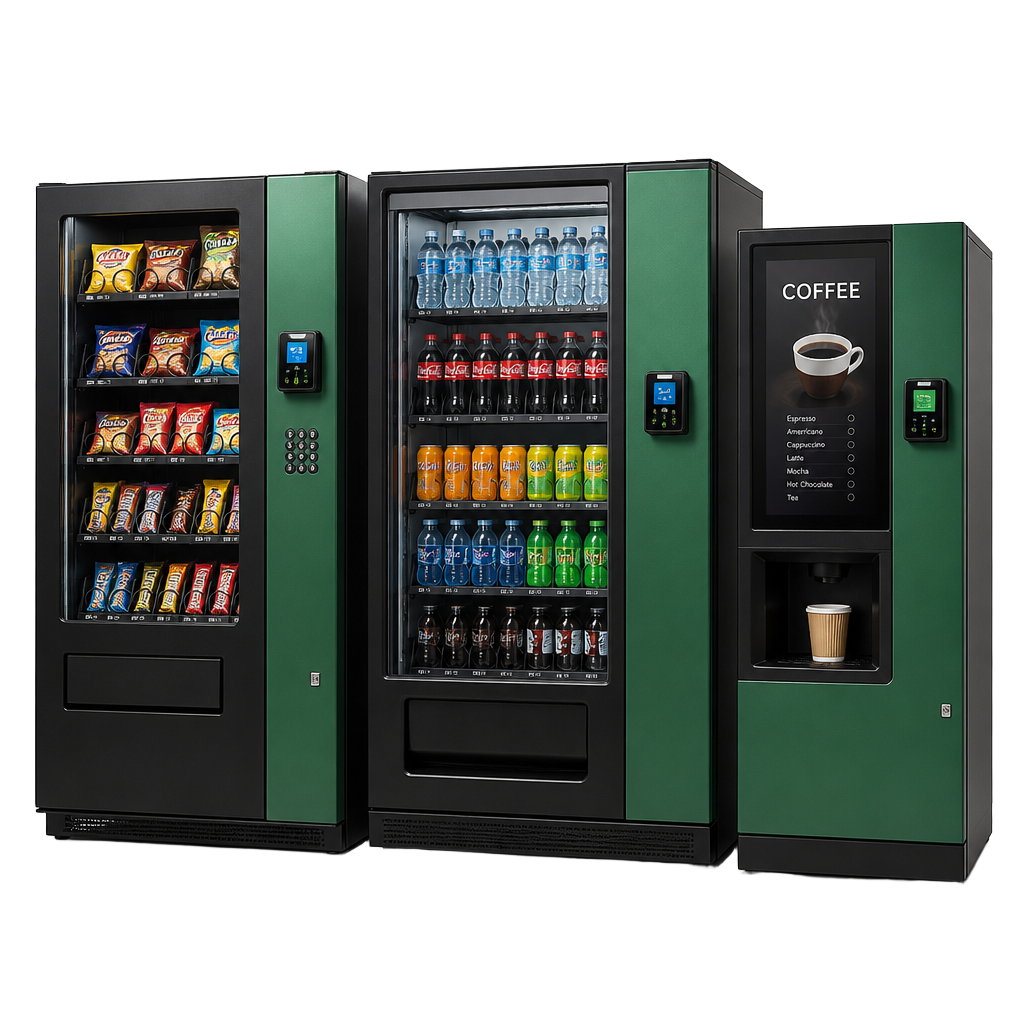

Secure yourRent to Own
Get vending machines on the road now and own them at the end of the term. New and established operators, Australia-wide — no financials required in many cases.
0% down options
Instant approval for qualified fleets