Rent to own vending machines: costs and terms
23 November 2026
Rent to own vending machines lets you make regular payments towards a machine, with ownership transferring only when the agreement’s requirements are met. Before committing, compare the total cost, ownership conditions and likely site cash flow against buying, financing or renting without an ownership option.
How rent-to-own arrangements work
A rent-to-own arrangement generally gives you access to a vending machine while you make payments over an agreed period. The provider may retain ownership until you complete the required payments and satisfy any other conditions.
Do not assume the final regular payment automatically makes the machine yours. Some agreements may require a separate purchase payment, written notice or payment of outstanding charges before ownership transfers.
Ask who supplies the machine, who owns it during the agreement and who handles servicing. These may be different businesses. Confirm whether you are dealing with the equipment provider directly or entering a separate finance arrangement.
Compare the full cost, not just the payment
A manageable weekly or monthly payment can still lead to a higher overall cost. Request a written breakdown covering the entire agreement, including the amount required to become the owner.
Compare these costs between offers:
- Upfront deposits, establishment charges and documentation fees.
- Regular payments, payment frequency and the agreement length.
- Delivery, installation, positioning and removal charges.
- Any final purchase payment or ownership transfer fee.
- Servicing, call-outs, parts and software subscriptions.
- Insurance requirements, late payment charges and early exit costs.
Check whether quoted amounts include GST and whether charges can change. Ask your accountant about GST treatment, deductions and the accounting implications of each option; do not assume rent-to-own receives the same treatment as buying or leasing.
Understand the ownership and exit conditions
Read the ownership clause alongside the default, cancellation and early purchase clauses. Together, they explain what happens if you complete the agreement, want to leave early or cannot keep making payments.
Ask for written answers to these questions:
- Exactly when does ownership transfer, and what documents confirm it?
- Can you buy the machine early, and how is that price calculated?
- What happens to previous payments if you end the agreement?
- Can the provider recover the machine after missed payments?
- Are you responsible for collection, damage or other termination costs?
- Can you relocate, sell or transfer the machine or agreement?
Also check whether a personal guarantee or security is required. If clauses are unclear, seek independent legal advice before signing rather than relying on a verbal explanation.
Secure a suitable vending site
The machine’s location matters as much as its payment schedule. A workplace, gym or accommodation site may look attractive, but access, customer demand and competing food options determine whether it can support regular repayments.
Visit the site at different times. Consider how many people are actually present, when they buy refreshments and whether the proposed position is visible and convenient. Check power access, mobile reception, security and delivery access.
Obtain a written placement agreement with the site owner. It should address site fees or commissions, electricity, access for restocking, responsibility for damage and the process for ending the arrangement.
Pay particular attention to timing: a short site agreement paired with a long rent-to-own commitment leaves you exposed if the location is lost.
Build a realistic cash flow forecast
Start with expected sales based on evidence from the proposed site, not the machine’s maximum capacity. Use cautious assumptions and test what happens during quiet periods, holidays or temporary site closures.
Subtract stock purchases, site charges, card transaction costs, regular equipment payments, insurance and servicing. Include transport and the value of your time spent purchasing stock, restocking, cleaning and resolving faults.
Allow for expired stock, refunds and downtime. A refrigerated machine with a cooling fault may interrupt sales and spoil products at the same time.
Keep working capital separate from the money needed to acquire the machine. You still need opening stock and a buffer for unexpected expenses. Ask whether your business could meet payments if sales were lower than expected or the machine needed relocating.
Choose the right machine and payment system
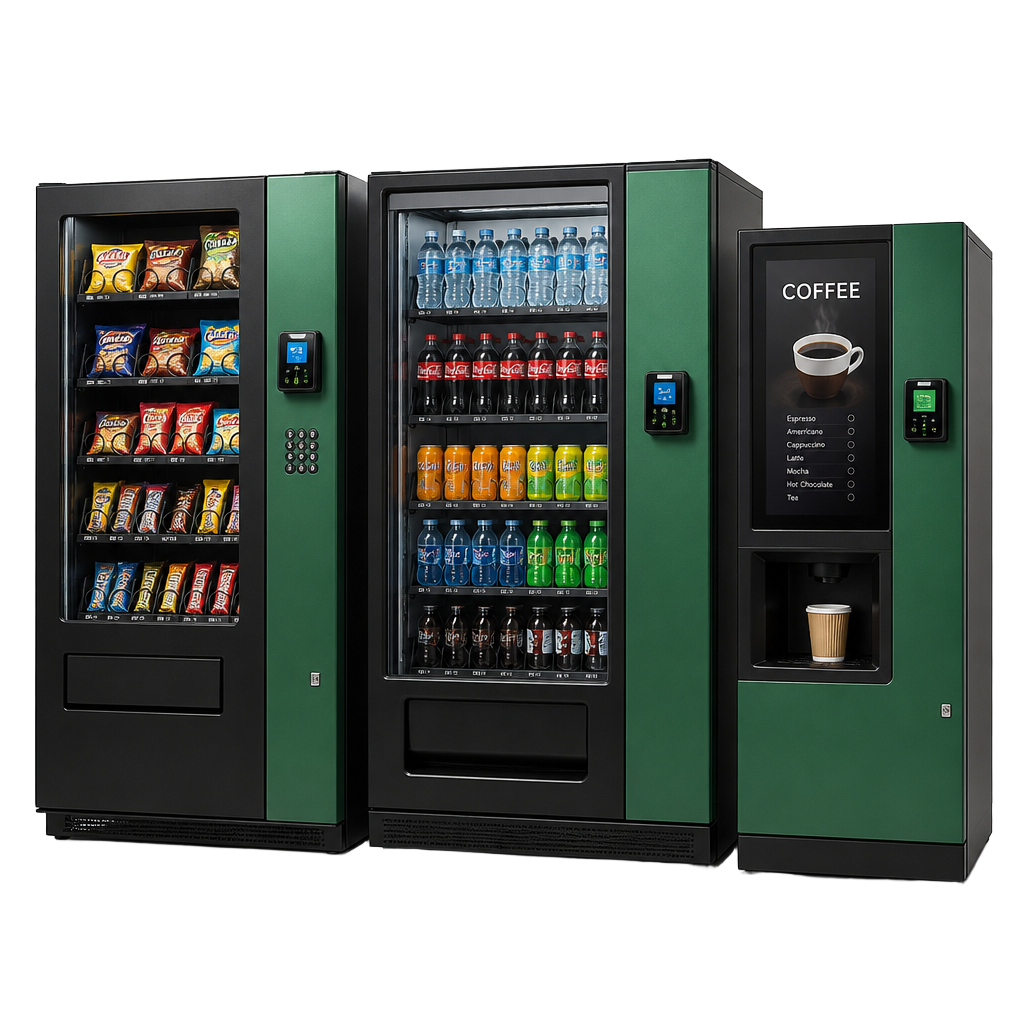
Match the machine to the products and the site. Check capacity, product dimensions, temperature requirements and whether trays can be adjusted when your product mix changes.
For used equipment, request its age, condition, service history and warranty details. Confirm that replacement parts are available and that a technician can service it in your area.
A card reader can affect both customer convenience and operating costs. Ask whether it is included, compatible with the machine and supported by reliable reception at the proposed location.
Check transaction charges, connectivity or platform fees, settlement timing and who owns the reader. If telemetry is included, confirm what information you can access, whether subscriptions cost extra and whether access continues after machine ownership transfers.
Clarify maintenance and downtime responsibilities
Rent-to-own does not necessarily mean servicing is included. The agreement should identify who pays for routine maintenance, repairs, parts and technician travel.
Ask how faults are reported, what support is available locally and whether any response times are written into the contract. Check whether a replacement machine is available during major repairs and whether regular payments continue while the machine is unusable.
Understand your own responsibilities, including cleaning, stock rotation, temperature checks where relevant and reporting faults promptly. Poor maintenance may affect warranty coverage.
Insurance also needs checking. Ask what cover the agreement requires, who arranges it and whether theft, accidental damage and public liability are addressed. Discuss suitable cover with an insurance professional.
Compare rent-to-own with other options
Rent-to-own may suit an operator who wants eventual ownership without paying the full purchase price upfront. Its usefulness depends on the contract, the machine and the business’s cash flow.
Buying outright avoids ongoing equipment payments but uses cash that might otherwise fund stock or expansion. A vending machine loan may provide another path to ownership, subject to the lender’s terms and approval.
A lease or rental arrangement may offer different equipment access and return conditions, but ownership is not automatic. Always read the specific agreement rather than relying on its label.
Compare options using the same machine specification, included services and time period. Look beyond the payment amount to total cost, flexibility, repair responsibilities and the amount needed to own the equipment.
Prepare before requesting finance options
Have the machine quote, supplier details, proposed site information and a basic cash flow forecast ready. Depending on the arrangement, a lender may request identification, business details, bank statements or financial records.
Explain whether you are starting out, replacing equipment or expanding an existing route. Existing operators can use their own sales and servicing records to support realistic forecasts, without assuming a new site will perform identically.
VendingFinance.com.au is an Australian referral service, not a lender or broker. It refers vending operators to lenders for vending machine finance options. Any approval is the lender’s decision, and available terms depend on its assessment and the proposed arrangement.
Next steps
Get a written machine quote and placement agreement, then compare the full cost and ownership conditions of each option. Check your cash flow buffer, ask your accountant about tax treatment and seek legal advice on unclear clauses before committing.
Vending Finance is a referral service, not a lender or broker. Approval and terms are the lender's decision; ask your accountant about tax. Next: get a finance quote, rent-to-own or the suburb directory.